 By admin
prefab labor camps
Large construction projects often involve a sizable workforce that must be accommodated near the worksite. One solution that has become increasingly popular in the construction industry is the use of prefab labor camps. These prefabricated structures offer a practical and efficient way to house workers, particularly in remote locations or sites with limited infrastructure. Understanding why prefab labor camps are widely used sheds light on their benefits in terms of cost, convenience, safety, and overall project efficiency.
One of the main reasons prefab labor camps are used in large construction projects is the speed of deployment. Traditional construction methods for worker housing can take months, delaying the project start or affecting workforce readiness. Prefabricated labor camps, however, are manufactured off-site and can be transported and assembled quickly on location. This reduces setup time significantly, allowing construction projects to commence on schedule. The modular nature of prefab camps means multiple units can be assembled simultaneously, making them ideal for projects that require housing for hundreds or even thousands of workers.
Cost efficiency is another major factor behind the use of prefab labor camps. Building permanent accommodation using conventional methods can be expensive due to labor, materials, and time requirements. Prefabricated units, on the other hand, are produced in controlled factory settings, minimizing waste and labor costs. The ability to mass-produce standardized units reduces overall expenses while still providing functional and comfortable living spaces. For large construction projects, this cost-saving approach can represent a significant portion of the project’s budget while still meeting housing standards for workers.
Flexibility and scalability make prefab labor camps particularly suitable for large projects. Construction projects often experience fluctuations in workforce size due to project phases, deadlines, or seasonal factors. Prefabricated camps can be easily expanded by adding more units or reduced by removing unused modules, allowing project managers to adjust housing capacity according to real-time needs. This adaptability ensures that worker accommodation remains efficient, without creating unnecessary costs or wasted space.
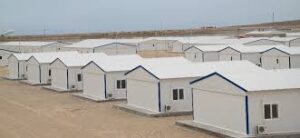
Why are prefab labor camps used in large construction projects?
Safety and compliance are also key reasons prefab labor camps are favored. Modern prefabricated units are designed to meet stringent safety standards, including fire resistance, structural stability, and sanitation requirements. These camps can be equipped with emergency exits, fire alarms, and proper ventilation systems to ensure the well-being of workers. Providing secure, compliant accommodation not only protects employees but also helps construction companies adhere to labor laws and industry regulations, reducing potential legal or reputational risks.
The comfort and livability of prefab labor camps are additional advantages that support their widespread use. Unlike temporary shelters or makeshift accommodations, prefab units can include amenities such as kitchens, bathrooms, sleeping areas, and recreational spaces. Well-planned layouts optimize space and ensure privacy while maintaining essential communal areas. By offering comfortable living conditions, construction companies can enhance worker satisfaction and productivity, which in turn contributes to smoother project execution and lower turnover rates.
Logistics and mobility further explain why prefab labor camps are preferred for large construction projects. Many construction sites are located in remote or undeveloped areas where traditional housing infrastructure is lacking. Prefabricated camps can be transported in sections to such sites and assembled with minimal on-site construction work. Once the project is completed, the camps can be dismantled and relocated to other sites, making them a reusable and sustainable solution. This mobility is particularly valuable for companies managing multiple projects across different regions or countries.
Efficiency in project management is closely tied to the use of prefab labor camps. Having the workforce housed on or near the construction site reduces travel time and logistical challenges. Workers can arrive on time, attend shifts consistently, and remain readily available for emergencies or overtime requirements. This proximity minimizes delays caused by commuting and enhances overall operational efficiency. Additionally, centralized housing facilitates better monitoring of health, safety, and attendance, providing managers with greater control over workforce operations.
Environmental considerations also contribute to the adoption of prefab labor camps. Factory-built units often use sustainable materials and energy-efficient designs, reducing the environmental impact compared to temporary site-built structures. Modular construction generates less waste, and many prefab camps are designed for long-term use or relocation, decreasing the need for continuous resource consumption. For construction companies aiming to meet environmental standards or corporate social responsibility goals, prefabricated labor camps present an eco-friendly solution that does not compromise functionality.
In conclusion, prefab labor camps are widely used in large construction projects due to their speed of deployment, cost efficiency, flexibility, safety, and comfort. They provide a practical solution for housing large workforces in remote or temporary locations while maintaining compliance with safety and labor regulations. The modular design, mobility, and scalability of prefabricated camps allow construction companies to efficiently manage workforce accommodation throughout the lifecycle of a project. By combining durability, functionality, and sustainability, prefab labor camps ensure that workers are properly housed, contributing to enhanced productivity and the successful completion of large-scale construction endeavors.